
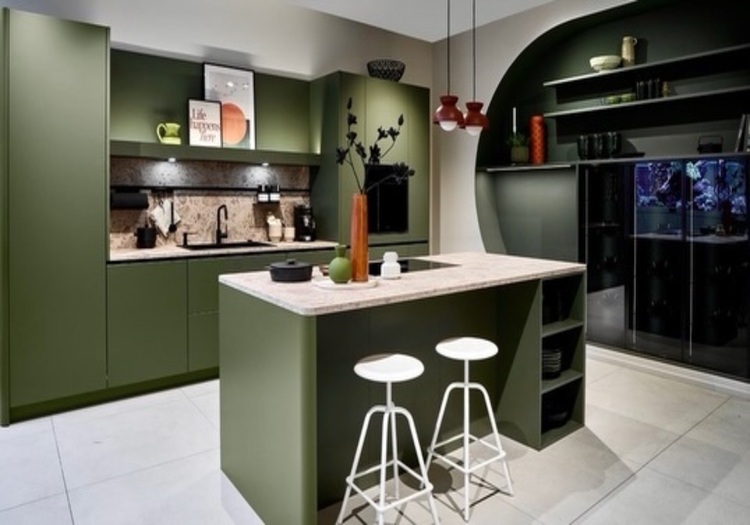
You can maximise storage with modular kitchen drawers by choosing the right drawer depth with proper dividers and full-extension glides that don’t jam under weight. A high-performance modular kitchen needs smooth-gliding drawers, vertical pull-out units and dedicated utensil organisers.
From masala containers to large kadais, everything will be stacked in order if the drawers are planned right.
Instead of listing accessories, you can run your drawer plan through 4 tests, so that you won’t regret: “It looked great, but it doesn’t actually work.”
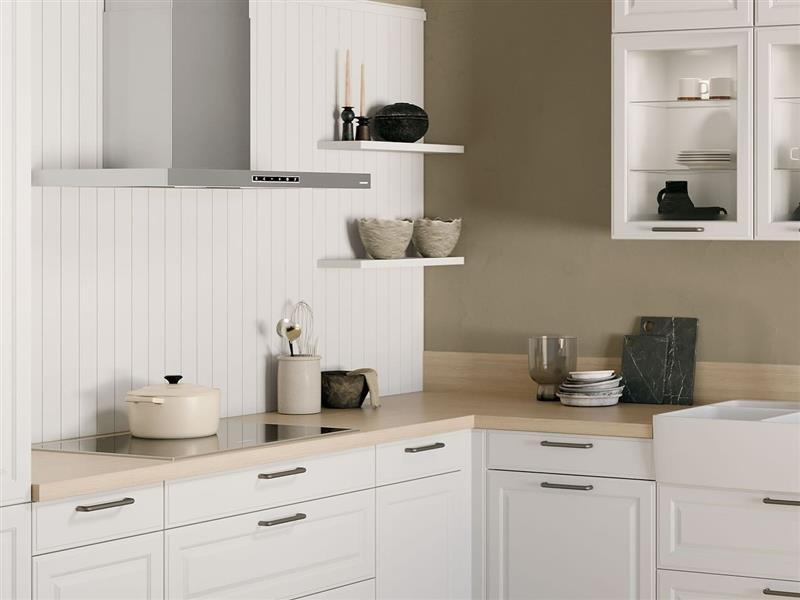
The 4-Test Planning Framework for Modular Kitchen Drawers
1. Depth Test: Wrong-size drawers for what you store
2. Divider Test: Chaos inside a “well-organised” drawer
3. Glide Test: Drawers that sag, jam or slam
4. Zone Test: Great drawers, wrong location
Test 1: Are Your Drawer Depths Matched to What You Actually Store?
Most modular kitchen cabinets fail not for the finish, but for the depth. A single deep drawer for spoons wastes vertical space. When the drawers become shallow, lids, pots and pans end up getting stacked on each other, not organised.
The fix is tiered depth, not uniform depth:
- Shallow drawers (10–15 cm): cutlery, small tools, spice jars
- Medium drawers (18–25 cm): plates, bowls, packaged food
- Deep drawers (30 cm+): pots, pans, large mixing bowls, appliances
The Result
Matching depth to contents is the single change that makes a kitchen feel like it has “enough” storage, even in a compact layout.
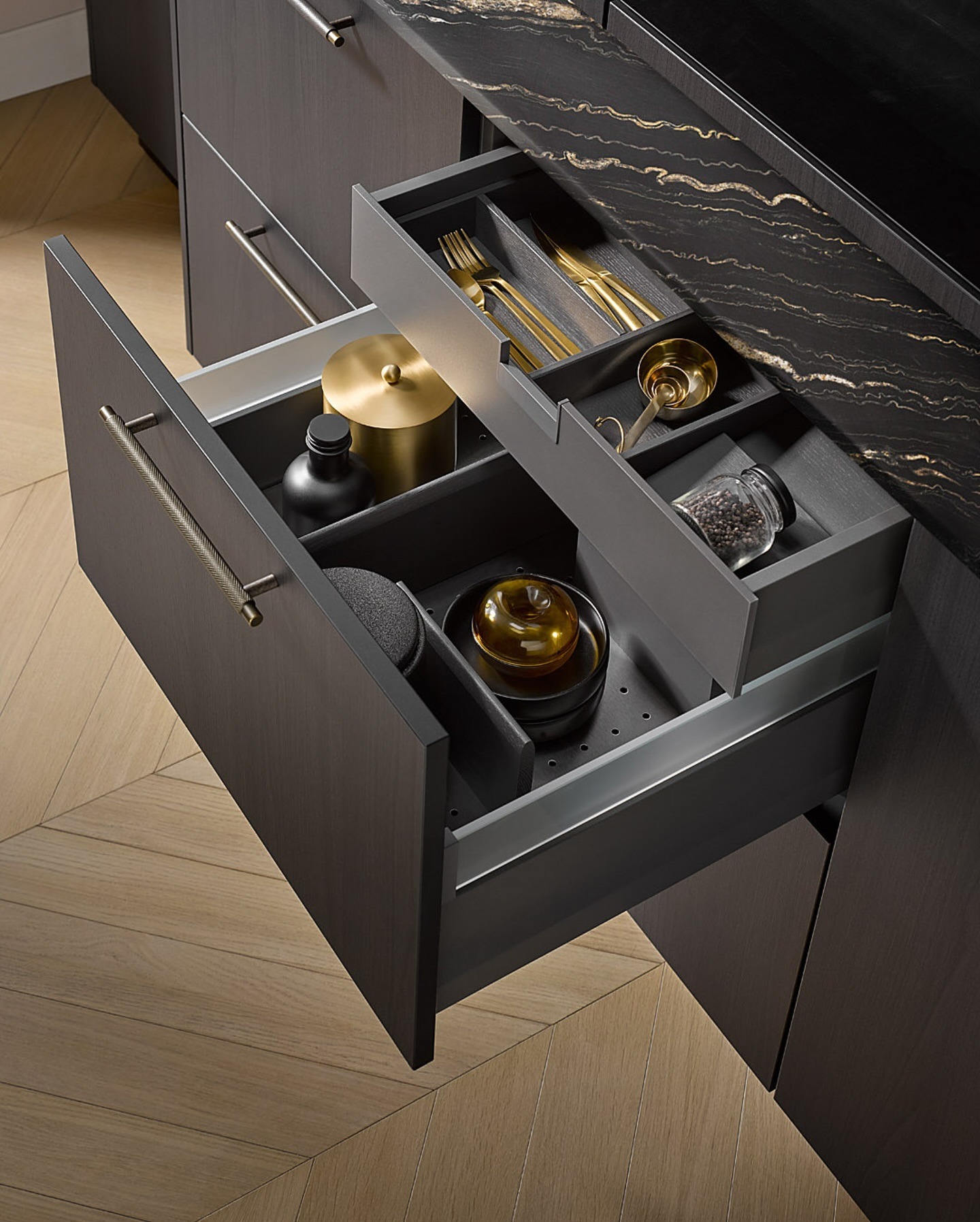
Test 2: Do Your Kitchen Drawers Have Dividers?
If well-sized drawers don’t come with organisers or dividers, utensils start clattering every time you open them, and everything gets jumbled up inside.
Plan dividers at the design stage, not as an afterthought:
- Cutlery trays with fixed compartments for spoons, forks and knives
- Adjustable dividers for drawers that hold mixed items – useful when your storage needs change over time
- Dedicated dinnerware inserts that hold plates upright instead of stacked
- Tandem or pull-out systems for narrow drawers that store tall bottles or trays
The Result
On busy Monday mornings, you find all the cooking utensils in perfect order inside the drawers.
Test 3: Will Your Drawers Glide Smoothly Even After a Year?
Cheap drawer channels sag under the weight of a fully loaded pot drawer, or stick when the kitchen gets humid.
The full checklist before drawer installation:
- Full-extension channels – The drawer opens completely, revealing everything inside
- High-rated soft-close mechanisms – The deep pot-and-pan drawer doesn’t sag under pressure.
- Moisture-resistant hardware – In high-humidity Indian kitchens, metal fittings are prone to corrosion.
The Result
You no longer have to put in extra effort to open and close the drawers during heavy kitchen traffic. The gliding tandem boxes work flawlessly for months, requiring minimal maintenance and replacement.
Test 4: Are Your Drawers Placed Where You’ll Actually Use Them?
The moment you install drawers in the wrong zones, workflows are hampered. This is a planning problem, not a hardware one.
Drawer placement around the cooking flow:
- Near the hob: shallow drawer for spices and frequently used tools
- Near the sink: medium drawer for dish towels, cleaning supplies
- Near the fridge or pantry wall: deep drawer for packaged goods and bulk items
- Away from daily traffic: the drawer for rarely used serving dishes or festive crockery
The Result
Modern kitchen design not only looks stunning but also performs flawlessly when you plan drawers around kitchen zones.
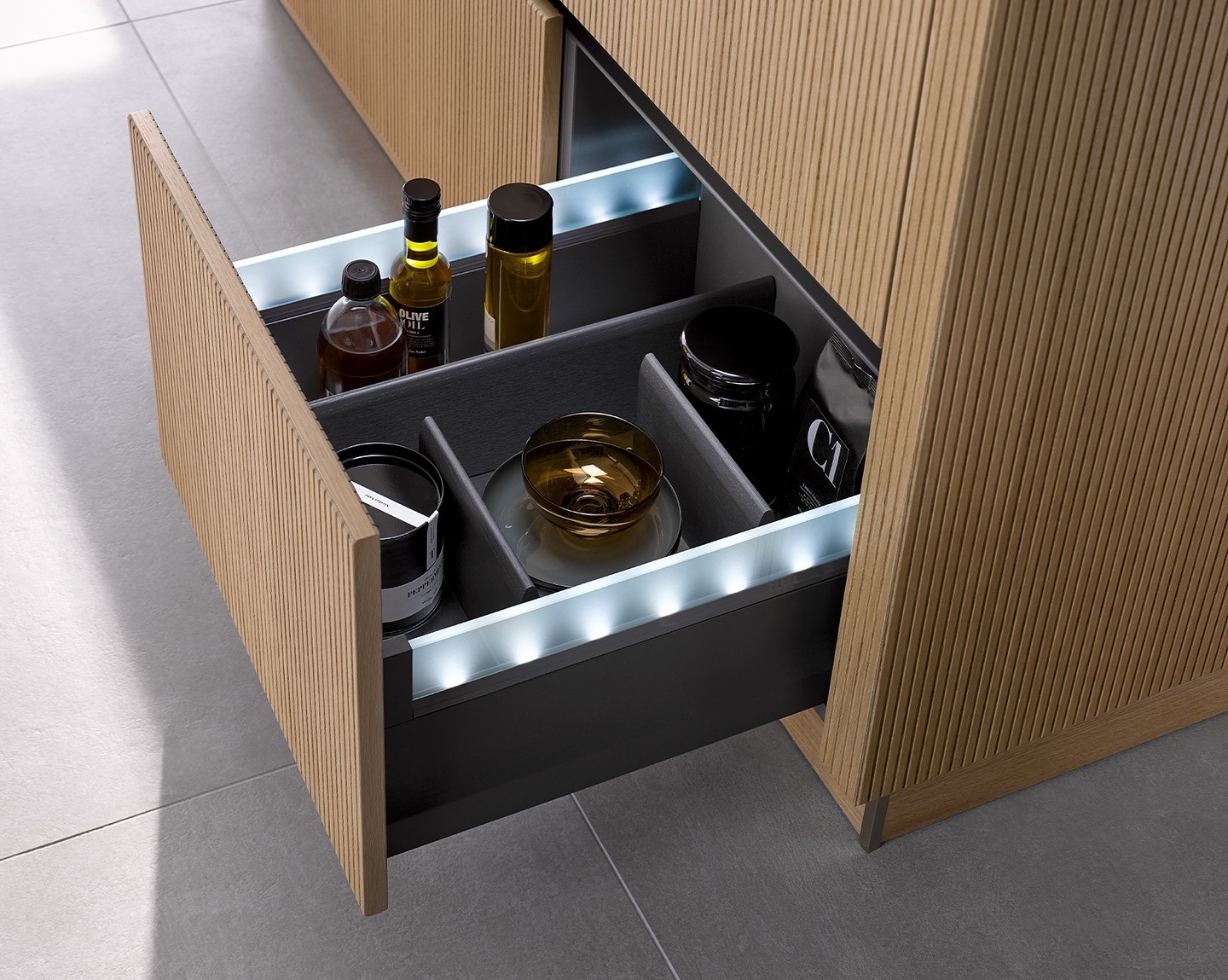
Pass The Planning Tests With German Engineering: Häcker Kitchens
Häcker Kitchens designs drawer systems based on kitchen ergonomics. They become an integral part of fully customised modular kitchen design, not add-ons. We don’t just hand out a catalogue as you step into our showroom; we understand your preferences and later visit the site to map kitchen dimensions.
Whether you are planning a modular kitchen layout for 2-BHK apartments or a spacious bungalow, German engineering delivers precision across integrated drawer systems. Powered by PUR-Bonding technology, the storage systems stay intact in oil, heat and humidity.
You can get after-sales service whenever you need it
Final Thoughts
Storage capacity isn’t decided by how many drawers you have; it’s decided by whether each drawer’s depth, dividers, glide quality and placement actually match how you cook. Run your plan through the four tests before you sign off, and you avoid the most common regret people post about months after installation.
Visit the nearest showroom and plan the modular kitchen drawers in the initial stages. You may connect with our experts on a call to ask queries.
FAQs
Why do modular kitchen drawers get stuck over time?
Due to low-quality channels, overloading beyond the rated weight, or humidity affecting the hardware, modular kitchen drawers get stuck over time. Full-extension, load-rated glides reduce this risk significantly.
How many drawers should a modular kitchen have?
The number depends on kitchen size and cooking style. In a small modular kitchen, 4–6 drawers across depth tiers can work. If your kitchen is large, you can add drawers as storage needs go higher, while matching the count to the depth of the contents.
Are deep drawers better than shallow drawers?
Not necessarily. Deep modular kitchen drawers suit pots, pans and bulk storage, whereas shallow drawers suit cutlery and spices. The best way is to use a mix of both.
Do drawer dividers cost extra in a modular kitchen?
If you add them after the base design is finalised, they usually cost extra. For a modular kitchen interior, planning dividers at the design stage is usually more cost-effective than retrofitting organisers later.
What is the ideal drawer height for a modular kitchen?
Common tiers are roughly 10–15 cm for shallow drawers, 18–25 cm for medium, and 30 cm or more for deep drawers. However, exact heights depend on the cabinet size and what you plan to store.